.png)
African American Fashion 1960s: Iconic Styles, Outfits, and Black Fashion Trends

When discussing fashion in the 1960s, vibrant patterns, sharp suits, and miniskirts typically come to mind.
It was also the era where African American fashion intertwined itself with the Civil Rights and Black Power movements.
A Harlem resident described the 1960s as the “Decade of Black Expression.”
For many Black people in the U.S. the decade illustrated the rebirth of pride and desire for self-determination and racial self-identification.
Through art, especially fashion, many communicated their ideas and beliefs regarding racial pride and black equality.
For several young Americans, the 1960s meant the transition from a conservative, natural, and polished appearance to a self-determined style of expression characterized by African centeredness.
In 1968, residents of Harlem began to sport tightly cropped hair (the Afro) and designed clothing that expressed their commitment to Black Nationalism and pride.
Natural hairstyles and accessories became a means for Black Americans to creatively and boldly express their belief in empowerment, self-determination, and dignity.
Some of the ideas illustrated by clothing and hairstyles expressed in the 1960s and 1970s are almost as bold and relevant today as they were then.
Let's take a closer look at how it all came together.

African American Fashion in the 1960s
The African American fashion of the 1960s is closely tied to the social and cultural movements of the time in the United States.
Movements like the Civil Rights Movement and Black Power Movement shaped attitudes and interests regarding racial identity and African heritage.
This is evident in fashion.
African Americans of all ages and walks of life began to wear clothes that emphasized their racial pride, identity and history.
Traditionally, black men and women dressed on the more conservative side. Black women sported dresses, cardigans, gloves, stockings, structured coiffed hairstyles. Black men wore suits, ties and polished shoes.
Looking well dressed was important.
It was a way to challenge negative stereotypes and present a dignified self to a society that continually denied respect to people of color.
But by the latter part of the decade, the entire social climate had shifted. The youth of the time began to adopt more individualized interpretations of how they expressed themselves.
This was most evident in how people dressed.
Bold geometric patterns and psychedelic prints became popular. The boundary between masculine and feminine clothing became more blurred as men began to wear more vividly colored shirts, jumpsuits and wide legged pants.
Women shortened their skirts, wore natural fabrics and bold, bright and expressed themselves with wildly vivid prints and bold accessories.
One of the more iconic expressions of this time was the Afro.
A natural textured cut helped to round out a person's facial features, and elevated the way they expressed their cultural and racial pride.
It was a conscious embrace of their natural self in place of what society deemed beautiful and acceptable.
This wasn't simply a hairstyle.
It was a statement.
What Type of Fashion Was Popular in the 1960s?
The 1960s were one of the most diverse decades in modern fashion.
There wasn't just one "1960s look." Fashion changed dramatically from the beginning of the decade to the end.
Some of the most recognizable 1960s fashion trends included:
Mini skirts
Shift dresses
A-line dresses
Tailored suits
Turtlenecks
Capri pants
Slim trousers
Bell-bottom trousers toward the end of the decade
Go-go boots
Knee-high boots
Geometric prints
Psychedelic patterns
Bold colors
Mod fashion
Statement jewelry
Headscarves
Large sunglasses
Natural hairstyles
Afros
African-inspired prints and garments
The Mod fashion movement was particularly influential among younger people.
Mod style favored clean lines, geometric shapes, short skirts, bold patterns, and a youthful appearance.
At the same time, the later 1960s moved toward the more relaxed and expressive aesthetic that would become associated with the 1970s.
That transition was especially important for Black fashion.
African-inspired clothing, natural hairstyles, and cultural symbolism increasingly became part of the visual language of Black youth.
What Are Some Examples of '60s-Style Outfits?
If you're trying to picture what an actual 1960s outfit looked like, it helps to break it down by style.
1. The Classic Shift Dress
The shift dress was one of the most recognizable women's fashion pieces of the decade.
It typically had a relatively simple, straight silhouette that hung away from the body.
A Black woman might pair a colorful shift dress with:
Low heels
Simple earrings
A structured handbag
A headband or scarf
Sunglasses
For a more dramatic look, she could choose a dress with geometric or psychedelic patterns.
2. Mini Skirt and Go-Go Boots
The miniskirt became a major symbol of youthful 1960s fashion.
A typical outfit might include a short A-line skirt, fitted blouse, patterned tights, and knee-high boots.
Go-go boots became particularly associated with the youthful, modern style of the period.
3. Tailored Suit
Not every 1960s outfit was flashy.
A beautifully tailored suit remained an important part of Black fashion.
Women could wear matching skirt suits with structured jackets, while men often wore sharply pressed suits with narrow or moderately wide ties.
This style was particularly common for formal occasions, professional environments, churches, and political events.
4. Turtleneck and Trousers
A fitted turtleneck paired with slim trousers created a simple but sophisticated look.
Black men and women could add loafers, boots, statement earrings, or a patterned jacket.
The outfit was understated but stylish.
5. African-Inspired Outfit
By the later 1960s, African-inspired fashion became increasingly significant within Black communities.
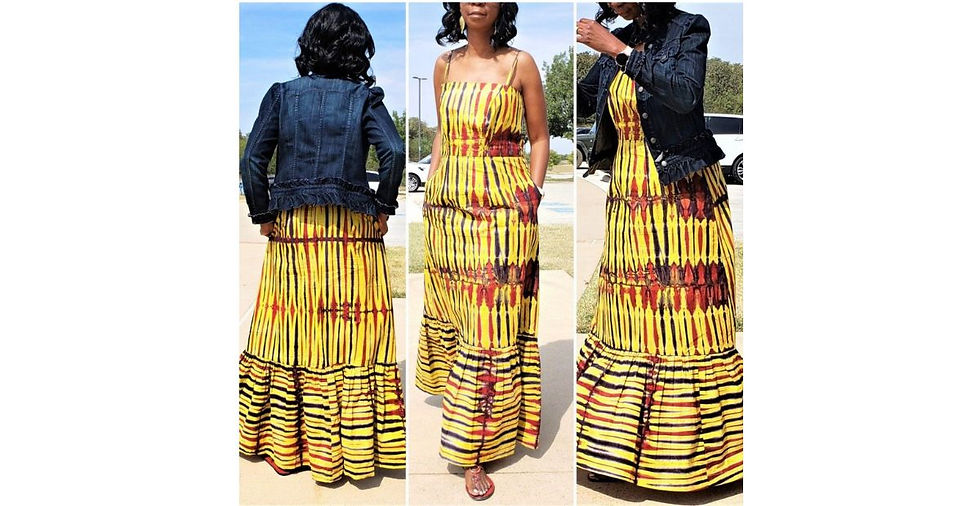
A woman might wear a brightly patterned dress, natural hair, large earrings, and wooden or beaded jewelry.
A man might wear a dashiki with trousers and sandals or other simple footwear.
This style emphasized African heritage and Black identity.
6. Dashiki and Trousers
The dashiki became one of the most recognizable pieces associated with Black cultural pride.
Usually loose-fitting and decorated with colorful patterns, the dashiki offered something very different from conventional Western clothing.
It could be worn casually or styled as part of a more deliberate cultural look.
7. Men's Patterned Shirt and Trousers
Men's fashion during the period was not limited to suits.
A younger Black man might wear a brightly patterned shirt with trousers, loafers, and carefully styled hair.
By the late 1960s, fashion was becoming less formal and more expressive.
Black Women's Fashion in the 1960s
Black women were particularly influential in shaping the visual identity of the decade.
The style ranged from elegant and conservative to bold and revolutionary.
Early in the decade, women often wore:
Pencil skirts
A-line dresses
Cardigans
Tailored suits
Gloves
Stockings
Pumps
Structured handbags
Carefully styled hair
But the later 1960s introduced a very different aesthetic.
Natural hairstyles became increasingly visible. Clothing became more colorful and expressive. African-inspired prints appeared alongside contemporary Western silhouettes.
Jewelry also became important.
Large earrings, beads, wooden jewelry, bangles, necklaces, and other statement pieces could transform an otherwise simple outfit.
And then there was the Afro.
The combination of an Afro, bold earrings, patterned clothing, and confident posture became one of the most recognizable visual representations of late-1960s Black style.
Black Men's Fashion in the 1960s
Men's fashion also went through a significant transformation.
At the beginning of the decade, a well-dressed Black man might wear a conservative suit, white shirt, tie, polished shoes, and carefully groomed hair.
The look was formal and sophisticated.
But younger men increasingly experimented with fashion.
Bright shirts, patterned jackets, turtlenecks, wider trousers, loafers, boots, and African-inspired clothing became more common.
The Afro also transformed men's appearance.
Instead of maintaining closely cropped or chemically altered hairstyles, some Black men began wearing their natural hair in larger Afros.
The hairstyle became an important symbol of confidence and cultural identity.
How Did Black Girls Dress in the 1970s?
Although the question moves into the 1970s, the answer is closely connected to the fashion changes that began during the late 1960s.
Black girls and young women in the 1970s had an incredibly diverse range of styles.
Some embraced the Black Power aesthetic, while others adopted disco, bohemian, or funk-inspired fashion.
Popular looks included:
Afros
Braided hairstyles
Bell-bottom jeans
High-waisted trousers
Maxi dresses
Halter tops
Platform shoes
Dashikis
Colorful African prints
Wide belts
Large hoop earrings
Beaded necklaces
Headwraps
Denim
Jumpsuits
Flared trousers
The 1970s also brought a stronger connection between Black fashion and popular music.
Artists associated with soul, funk, disco, and R&B became major fashion influences.
Think about the visual style surrounding groups and performers of the era.
Big hair.
Bold colors.
Wide trousers.
Platform shoes.
Sparkling fabrics.
Huge earrings.
Statement collars.
The look was expressive, confident, and impossible to ignore.
And many of these styles had roots in the cultural experimentation of the late 1960s.
What Trends Did Black People Start?
Now the history gets even more fascinating.
While Black Americans impacted American fashion, they impacted it in a far greater capacity by developing, transforming, popularizing and redefining numerous fashion and beauty trends that eventually impacted the broader American mainstream.
The Afro
Of course, the Afro is perhaps the best known of these.
While the 1960s were not the first time that black Americans (as well as others) wore their hair naturally, the Afro was incredibly popular during the Black Power movement and beyond.
The Afro was a symbol of resisting “the Man” and society’s attempts to dictate what was beautiful and acceptable.
Its legacy and influence continues to this day.
Natural Hair as a Cultural Statement
Since the 1960s, Black Americans have expressed pride in their natural hair and fought against the norms of society to relax or otherwise hide their natural curls.
Modern natural hair movements, including contemporary conversations around curls, coils, protective styles, and Black hair acceptance, are connected to this longer history.
African-Inspired Fashion
This same sentiment is reflected in the growing appreciation for African-inspired clothing of the late 1960s and 1970s.
The explosion of African prints and other culturally inspired jewelry and beads became not only fashionable, but reinforced a sense of pride among black Americans.
It cemented their visual connection with Africans on the continent.
Hoop Earrings and Statement Jewelry
Large hoop earrings have definitely crossed cultures and periods, so Black Americans can’t really own hoop earrings.
That said, the redefining of what was acceptable and beautiful in American fashion was largely influenced by Black women of the time.
Black Street Style
Another major contribution was the development of distinctive Black youth and street styles.
Clothing increasingly became connected to music, neighborhood culture, dance, politics, and personal identity.
This relationship between Black music and fashion would become even stronger in later decades through funk, hip-hop, R&B, soul, and eventually rap culture.
Modern streetwear owes a significant cultural debt to these developments.
The Connection Between Black Music and Fashion
The story of black American fashion is directly linked to the story of black American music. For the first time in history, black American artists were hired to produce and own their own record labels and music.
Music artists became fashion icons. They showcased their music and style on various media channels.
Audience members were able to buy and wear the same outfit artists wore in concerts and other performances.
Artists wore the latest attire and hairstyles and triggered new trends. Fashion and music influenced each other and reflected the culture and times of the society.
Black Fashion and the Black Power Movement
Late 1960s Black fashion strongly reflects the Black Power Movement. Black Power was a social and cultural movement that encouraged pride in one’s Black identity and heritage.
Black pride was reflected in various ways including in the music and the fashion of the time. Natural hair, Natural earrings and prints reflected the cultural pride of the time.
People intentionally dressed to communicate their cultural pride. Everyone wore looks that carried a specific meaning. Typically, looks were chosen to be empowering and culturally enlightening.
Importance of 1960s Black Fashion Today
Fashion of the 1960s is still relevant today. Black artists of the late 1960s sported natural hairstyles, bold colors, eye-catching prints, and big hoop earrings.
They also wore African designs and geometrical prints. Various designers today maintain vintage and retro designs and incorporate bold Africentric elements.
Fashion has a funny way of coming back around.
A trend that seems completely new might actually be a modern interpretation of something that appeared decades earlier.
That's especially true with Black fashion.
Designers, musicians, celebrities, and everyday people continue to revisit the visual language of the 1960s and 1970s.
But they don't simply copy it.
They reinterpret it.
How to Create a 1960s-Inspired Black Fashion Look Today
You don't need to dress like you're attending a 1960s costume party.
The trick is to borrow elements of the era and combine them with contemporary pieces.
For example, you could pair:
Modern outfit + vintage influence
A simple black dress + large hoop earrings + natural hairstyle.
Or:
High-waisted trousers + fitted turtleneck + vintage-inspired sunglasses.
Or:
A modern African print dress + statement earrings + simple shoes.
Or:
Wide-leg trousers + patterned shirt + loafers.
The goal is not to reproduce the decade perfectly.
It's to capture its spirit.


Comments