.png)
Aso-Ebi Fashion: What It Is, Meaning, Styles & How to Choose the Perfect Fabric

Have you ever been to a Nigerian social event? Traditional engagement, birthday celebration, naming ceremony, or other big social party, If you have, you've likely noticed how people always look Dazzling.
Not just ‘good’; Coordinated good.
You’ll see dozens of women wearing the same fabric, but in different styles, and then see men wearing the same fabric but in different styles of Agbada or Senators.
Someone is wearing a dramatic Gele, another person has a beautifully tailored corset dress, and someone else has turned the same fabric into a completely different style.
That's Aso-Ebi fashion.
Nigerians embrace colors and Aso-Ebi is all about colors. Choosing the right Aso-Ebi fabric is art.
This brings us to the main question, what is Aso-Ebi?
Let's break it down.
What Does Aso-Ebi Mean?
The term Aso-Ebi comes from the Yoruba language.
"Aso" means cloth or clothing, while "Ebi" refers to family or relatives.
Put together, Aso-Ebi broadly refers to clothing worn by a group of people connected to one another, traditionally family members or close associates, for a particular social occasion.
Over time, the practice has expanded beyond biological family.
Today, Aso-Ebi can include:
Family members
Friends
Wedding guests
Colleagues
Church members
Community members
Bridal parties
Social groups
The clothing creates a visual connection between members of the group.
And that's part of the fun.
At a large Nigerian wedding, you can often tell who belongs to which group simply by looking at their fabric and colors.

Why Is Aso-Ebi Important in Nigerian Culture?
Aso-Ebi is about way more than just taking coordinated photos.
It signifies strong cultural and social values.
Wearing Aso-Ebi reflects one’s solidarity, belonging and support for a family, friend or loved one.
An example can be traced to when a bride’s family decides on a fabric for guests, and guests who purchase and wear the fabric show their support and solidarity for the family.
The same can be said for the support and solidarity shown to a family for a loved one during birthdays, funerals, anniversaries, naming ceremonies and other events.
There’s a strong social factor with Nigerian celebrations.
Food, music, venues and decorations play a big role.
But what about fashion?
That’s an event in itself.
Aso-Ebi and Nigerian Weddings
Nowhere can Aso-Ebi be seen more than at a Nigerian wedding.
A wedding can have several Aso-Ebi groups.
For example, a bride’s family may have a different fabric from the groom's family. Friends of the bride may have a different fabric from friends of the groom.
All of this creates a strong sense of individuality and uniformity.
Everyone is part of the same visual group, but nobody looks the same.
Some may wear a mermaid gown. Others may wear a ball gown.
A midi dress may be the choice of some, while a long and flowing kaftan may be the choice of others.
The fabric choice creates the connection, but the tailoring adds the individual touch.
There’s no universal fabric for Aso-Ebi.
Different materials can result in various strong and bold fabric choices.
Different Aso-Ebi Fabrics and Their Uses
When it comes to Aso-Ebi, there isn't one universal fabric.
The best fabric for you depends on your style, the event, and your budget.
Below are some of the most popular fabrics.
Lace
One of the most popular fabrics for Aso-Ebi is lace.
It is especially popular for use in Nigerian wedding attire and other formal events.
There are many varieties of lace including:
- French lace
- Cord lace
- Guipure lace
- Sequined lace
- Beaded lace
- Embroidered lace
Lace is a great fabric for creating a sophisticated look for an Aso-Ebi outfit.
It works well with structured dresses and can be paired with corsets, sleeves, and other overlays.
For a formal wedding where you need an Aso-Ebi outfit that is sophisticated and has an air of luxury, lace is a good choice.
Ankara
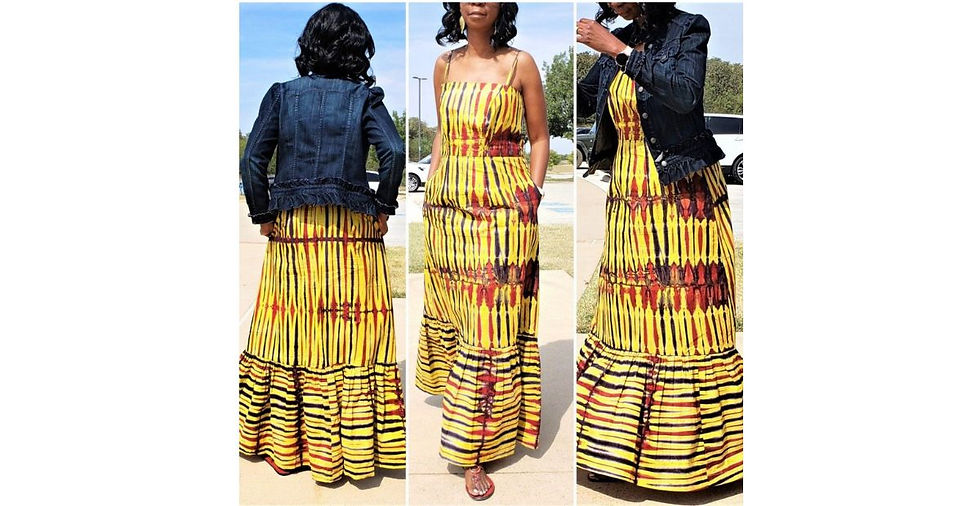
Also very popular for Aso-Ebi is Ankara fabric.
Ankara offers a completely different look from lace.
It is vibrant and creates a more playful, energetic look.
Ankara can be used to create formal wear including:
- Dresses
- Skirts
- Blouses
- Jumpsuits
- Men's shirts
- Children's outfits
- Matching family outfits
- Two piece sets
- Jackets
Ankara can be very beautiful and stunning without a lot of embellishment.
The print can speak for itself.
With a well designed Ankara fabric and good tailoring, an outfit can be stunning without a lot of decoration.
Aso Oke
Another culturally significant fabric is Aso Oke.
It is a handwoven textile of the Yoruba people of southwestern Nigeria.
It is traditional, elegant and sophisticated and perfect for Aso-Ebi wear for formal events.
Aso Oke is often used for:
Gele
Iro
Buba
Men's caps
Agbada details
Traditional wedding outfits
It can also be incorporated into contemporary fashion.
One of the things that makes Aso Oke special is its texture and woven appearance.
It feels different from mass-produced printed fabrics.
For someone who wants a traditional Nigerian look with strong cultural significance, Aso Oke is an excellent choice.
George Fabric
George Fabric is associated with Nigerian occasion wear. It is especially popular in certain traditional styles and can be embellished with beads, sequins and/or other decorative details.
When properly tailored, George fabric can create a regal, luxurious appearance.
It is commonly used for traditional wedding attire.
Organza
Organza is a sheer, crisp fabric. It can be used in various ways to enhance a design such as sleeves, overlays, bows and/or ruffles. It can also be used to create a full outfit if desired.
Because organza has very little body on its own, it is best used thoughtfully in a design rather than just added for enhancement without consideration for the other components of the outfit being designed.
Velvet
Velvet is another option. It is a luxurious fabric, especially for Aso-Ebi outfits.
It is best to use deep colors, e.g. Burgundy, Emerald, Navy, Wine and Chocolate for an elegant, dramatic appearance for evening events.
Keep in mind however, that velvet is a heavy fabric, which is not ideal in a hot climate.
How to Choose the Perfect Aso-Ebi Fabric
Now we get to the interesting part. How do you go about choosing the right fabric?
It is easy to be attracted to a fabric just because its color is pretty.
However, before you pay for it, you should also consider the following:
1. Consider the Type of Event
Is it a
Wedding?
Traditional engagement?
Birthday?
Naming ceremony?
Funeral?
Anniversary?
Church event?
Graduation?
Corporate celebration?
A very elaborate lace fabric might be perfect for a wedding but excessive for a relatively casual birthday gathering.
Likewise, a simple cotton Ankara outfit may be perfect for a daytime celebration but may not give you the formal appearance you're looking for at a black-tie-style wedding.
The event should influence the fabric.
2. Consider the Weather
This is one of the most overlooked factors.
Nigeria can be hot and humid, particularly during certain parts of the year.
A beautiful outfit isn't much fun when you're sweating through it.
For outdoor events, consider fabrics that offer better breathability and comfort.
For evening events or cooler conditions, heavier fabrics can be more practical.
If you're attending an Aso-Ebi event in Canada, the United States, or the United Kingdom, the calculation changes again.
A heavy fabric that feels uncomfortable in Lagos might actually be perfectly practical during a winter celebration in Toronto.
3. Think About Your Body Shape and Desired Silhouette
Different fabrics behave differently.
Some fabrics are stiff and structured.
Others are flowing and soft.
Some stretch. Others don't. Think about what you want to make.
Do you want to make a dramatic structured corset gown? Then you need a fabric that has structure.
Do you want to make a flowing maxi dress? A softer fabric may be more appropriate.
Before you buy the fabric, think about the outfit you actually want to make.
DON’T buy fabric first and force yourself to make an outfit with that fabric if it isn’t appropriate.
4. Check the Fabric Quality
Not all beautiful colors mean good quality.
Inspect the fabric.
Look at the weave, weight, and texture.
Is the fabric embroidered or beaded?
Is the print consistent?
Are the colors even?
Does the fabric feel cheap?
Is the embellishment securely attached?
How does the fabric feel?
Is the fabric stiff?
Is the fabric of good quality?
5. Consider the Color
Of course color is important.
Think about your complexion.
Are there colors that complement your skin tone?
Think about the event colors.
Some families choose event colors.
Is the venue indoors or outdoors?
Is it day or night?
Think about your accessories.
Do your accessories complement your fabric choice?
6. Don't Ignore the Print
If you are choosing Ankara or another printed fabric, look closely at the pattern.
Some prints are extremely busy.
Others are more subtle.
A very large print may look completely different when transformed into a fitted dress compared with how it appears on the fabric roll.
This is particularly important for people ordering custom-made clothing.
Ask the tailor how the print will be positioned.
A skilled tailor can sometimes use the direction of a print to make the final garment look much more intentional.
7. Think About Embellishments
Beading, sequins, crystals, embroidery, pearls, and appliqué can take an Aso-Ebi outfit to another level.
But there's such a thing as too much.
If the fabric already contains heavy embellishment, your tailor may not need to add a lot more.
On the other hand, a relatively plain lace fabric may benefit from carefully placed stones, embroidery, or beadwork.
The goal is balance.
8. Consider the Cost Beyond the Fabric
This is important.
The price of the fabric isn't necessarily the final cost of the outfit.
You may also need to pay for:
Tailoring
Beading
Embroidery
Lining
Boning
Zippers
Buttons
Gele styling
Headpiece
Shoes
Bag
Jewelry
So before buying an expensive Aso-Ebi fabric, calculate the total outfit budget.
There's no point spending almost your entire budget on fabric and then discovering you can't afford the tailoring needed to make it look good.
Aso-Ebi Fashion for Women
Women's Aso-Ebi fashion is incredibly diverse.
Popular styles include:
Mermaid gowns
Corset dresses
Off-shoulder dresses
Peplum tops
Fitted midi dresses
Maxi gowns
Wrapper and blouse
Boubou
Kaftan
Jumpsuits
Two-piece outfits
The same fabric can produce completely different results depending on the cut.
That's why tailoring is so important.
A beautiful fabric with poor tailoring can look disappointing.
An ordinary fabric with excellent tailoring can look surprisingly expensive.
Aso-Ebi Fashion for Men
Men have plenty of options too.
Some popular styles include:
Agbada
The flowing Agbada is one of the most recognizable Nigerian traditional outfits.
Senator Wear
A more streamlined option, usually consisting of a tunic-style top and matching trousers.
African Print Shirt
A simpler choice that works well for less formal celebrations.
Kaftan
Comfortable and elegant, especially when paired with embroidery.
Matching Family Outfits
Men can coordinate their clothing with their wives and children using the same Aso-Ebi fabric.
Wrapping up
Aso-Ebi fashion is much more than matching fabric.
It's a beautiful combination of culture, celebration, community, identity, friendship, and personal style.
From luxurious lace and vibrant Ankara to traditional Aso Oke, George fabric, velvet, and contemporary textiles, there are countless ways to create an unforgettable Aso-Ebi outfit.
The secret isn't necessarily choosing the most expensive fabric.
It's choosing the right fabric for your event, body, climate, style, and budget, then pairing it with excellent tailoring and thoughtful accessories.
And remember, your outfit doesn't have to look exactly like everyone else's.
That's one of the best things about Aso-Ebi.
The fabric connects you to the group.
Your styling tells your own story.
So when the next Aso-Ebi announcement comes around, don't just ask, "What fabric are we wearing?"
Ask:
"What can I create with it?"
That's where the real fashion begins.


Comments